Several case studies demonstrate the execution of branding strategies by various countries and regions. Usually, the aims of the strategies are; to create a national/regional identity, to update or change perceptions about the place, and to attract investors, tourists and sometimes immigrants to the region. Some examples are as follows.
Amsterdam
Amsterdam has a rich history and an international outlook, it used to be one of the major business center but more and more competitors appeared and Amsterdam needed to improve its marketing in order to keep attracting business men. In the ‘60, Amsterdam suffered from its bad image which was composed of one main element which is the sexual liberation and the narcotic indulgence. It was not the image the government wanted to show. When thinking about Amsterdam, people used to think about vandalism, antisocial behavior and lack of public order. Since 2004, Amsterdam became a brand called Iamsterdam and its aim is to make Amsterdam become one of the most popular city in Europe. This includes a new logo and a new marketing strategy. According to Anholt City Brands Index 2005, Amsterdam was the 6th world’s most successful city brands and it expects to increase visitor numbers, investment and market position in the world.
Barcelona

The city is one of Europe’s most popular cities and according to the Country Brand Index it is the city with the seventh best brand in the world. This situation has been achieved thanks to an ambitious and effective place branding strategy which have been implemented during a long time. The repositioning of the city began with the Olympic Games 1992 and since then the local Government has invested in projects ranging from usual promotion to reconstruction and construction of buildings and monuments. In the promotion, the three core values of the city are put in the centre. These values are sport, heritage and modern design. The city has been doing really well, but there are some problems arising due to the strategy and the success. Some scholars has expressed some concerns about the clarity of the brand of Barcelona since the number of communicated images is growing large. New monuments together with new definitions of “what the city is” are accumulating and there is a risk that this overload of images just will create a fuzzy overall image of the city. Furthermore, as the popularity of the city has steadily increased together with the flow of tourists, the characteristics of Barcelona has changed. The genuine and romantic Spanish environment one might have found in the past has now become more busy and “touristic” which might scare off some potential visitors.
Belgium

Perception of Belgium has been steadily declining on all attributes. Among Belgium’s meager assets: its respect for political freedom, its cuisine, the feeling of security that is emerging. In short, the country is very safe but unattractive. Country Branding is a way to start a process, which can lead to a unique, consistent and successful positioning of Belgium as a Nation involving the country's leading political and business society. “Business Comfort in the heart of Europe. Come for Work, Stay for Life” became branding “slogan” of Belgium. The aim of creation of the nation’s perception abroad is to attract inward investment, recruitment of foreign talents and students, and expansion into the country by foreign companies. The best way to build this perception is to apply Branding Program, which in turn consists of development of the core idea, symbol, brand book and messages. Messages required for the very different but complementary sectors should be coordinated and modulated so that they are appropriate for each audience. Nowadays there is a clear opportunity/must to start “Nation Branding” for Belgium. Belgian European Presidency in 2010 is (was) a first opportunity.
Central/Eastern Europe
The brand image of Eastern Europe (Poland, Hungary, Czech Republic, Slovakia) has been linked to the Soviet Union and to political and social oppression. However, since liberation, these countries have all experienced radical changes in the structure of their society. Culturally, the central/eastern European countries are very similar and have many aspects of historical heritage in common. In recent years, these countries have become more aware of the value of creating a brand, especially to differentiate each country from the more general term “Eastern Europe”. Some of these countries are already well known, for example Hungary for it’s Tokaj wine and Thermal Baths, and the Czech Republic for it’s beer and musicians. Efforts to better position the countries in the international market have been quite successful, and these countries are better known today than ten years ago. Tourists and investors are also now exploring the eastern parts of Europe more than in the past. However, there have been several problems with branding strategies, for example, the lack of cooperation between organisations and government agencies. Without this cooperation, campaigns are less effective, therefore with better cooperation, there would be potential for the region to become even more successful.
Colombia

At the beginning of the 90’s, the Colombian government, together with the business community of the country, decided to analyse the strengths and the weaknesses of the Colombian economy in order to design a strategy for the future. One of the main results was that the country was in urgent need of a brand which could be used to promote all Colombian industries. Some years later, a committee was formed to be responsible for the design and construction of the brand platform of the country. Colombian coffee has a strong position in the world, as it is perceived as being of high quality. One example of this is the brand “Juan Valdez” from Cafe de Colombia, which has been successful in USA. The main aim of the new committee was therefore to emphasize the positive associations, and fight the common negative perceptions like corruption, violence and drugs, in order to boost tourism and attract foreign investors. “Colombia es Pasión” was the resulting tag line for the country, which is based on the core essence of the local people. In 2005, an umbrella brand was launched together with this tag line with the aim to emphasize the good things about the country. The brand is used by several big companies in Colombia in order to co-brand their own brands and products and accentuate their link to Colombia.
Copenhagen
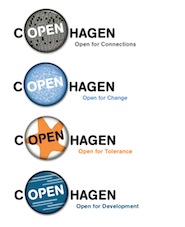
"OPEN Copenhagen’’ is a brand which is build on sustainability to make Copenhagen the most open capital city.
The value ‘’OPEN’’ is promoted with a sustainable vision, aiming to raise the preferences in favour of Copenhagen, being the first choice for investors, tourists and locals. It is stated that Open Copenhagen is the only capital city with a value-based city brand. The Idea of that project began in 2008 and was launched on May 1st 2009. The main initiators were Wonderful Copenhagen and Copenhagen Capacity, as well as another organizations from that region. The brand is supposed to be an open, common source. This means that it is accessible and usable for everyone. Everyone can contribute something to that product and make use of it.
Additionally a ‘’OPEN Copenhagen Logo Creator’’ is accessible to everyone, to design individual versions of the logo.
It aims to strengthen the collaboration between companies or institutions to create a synergy in order to have a bigger marketing impact.
”There is value in creating a movement that is larger than the end product.”
- Martin Lumbye, Partner, Momondo
"It is important to brand Microsoft as a business, and Copenhagen as a city, in order to attract international knowledge labour to our development centre in Copenhagen. We see the OPEN Copenhagen brand as a flexible and dynamic concept which will give our branding as an employer an extra dimension,”
- Charlotte Mark, managing director, Microsoft Development Center, Copenhagen
Croatia
Croatia is a former Yugoslavian country. During the years of communist rule, Yugoslavia was the most successful country of the East-Block countries for attracting tourists. The reason for this was the positive image of the country communicated to the Western world. This positive image was, however, heavily damaged during the turmoil when the country collapsed and was fragmented into different sovereign states. Croatia was one of the countries in the Balkans which suffered the most from a damaged image. The war and atrocities which resulted from the conflict were things that people strongly associated with the country. Therefore, a country branding strategy was necessary in order to change this image. Using tag lines like “Small country for for a great holiday” and “A new welcome. An old friend” the country is trying to erase the old image and try to attract tourists back to the resorts like Dubrovnik which, during the Yugoslavian era, were quite popular. Hosting events like the tourism conference in Dubrovnik 1997 was also a part of the strategy to redefine the country.
Denmark
The paper deals with the Danish country branding project, where two main fields were set as a priority: investments and tourism. The web page ‘Invest in Denmark’, established by the Ministry of Foreign Affairs, has become a main tool, responsible for the promotion of Denmark (website, seminars abroad, publications) as a transparent and uncomplicated place for doing business. As for tourism, the Danish Tourist Board promotes the country to both foreign and domestic markets by presenting itself as friendly, familiar and positive (“Denmark an oasis in Europe”). A common branding platform for investment and tourism promotion was designed [18], however, after the Mohammed Crisis in 2007, Danish reputation fell drastically. A recent study revealed that knowledge about the country is superficial – Denmark was associated mostly with butter, bacon and H.C. Andersen. The government decided to invest a large amount of money in a re-branding programme that was supposed to boost international awareness of the country.
Edinburgh
Before creating the brand “Edinburgh Inspiring Capital” which has been created by Marketing Edinburgh Ltd, a public/private body, the city of Edinburgh did some research about the city image and it showed that it was a nice city to visit, invest, live, work and study in. The problem was that the city was not well-known especially internationally. In 2005, Edinburgh Inspiring Capital was created in order to confirm this image and to keep promoting the city in this way. The number of tourists keeps growing as well as visitor spending. Furthermore, thanks to tourism growth, many jobs have been created in Edinburgh, which is a good element for national economy. Moreover, Edinburgh has been elected the Best UK City according to the Guardian Observer and Guardian.co.uk Readers’ Travel. It has also been elected Europe’s Leading Destination during the World Travel Awards 2012.
Estonia
Estonia is home to a small nationality and a slightly larger nation. On the world map it is an almost imperceptible slice of Nordic sea, forest and land.
This small nation and small country are particularly valuable. Without david, there would be no Goliath, and without Estonia the world would not be what it is today.
Estonia is full of surprising contradictions and exciting things to share and show to others, and continually re-discover on one’s own. As important as it is to bring foreigners here and show them what life is like here, it is equally important to go abroad and talk about Estonia to as many people as possible and as unambiguously as possible.
Finland

Finland’s brand stems from three justified assumptions are: 1) Finland is an exceptionally solution-focused society that has been able to create lasting well-being, success and prosperity. 2) Finnish society is linked to a large number of solutions that are – and will be in the foreseeable future – in global demand. 3) Finnish society can become even better and more interesting, if we can correctly refine the existing strengths. The functionality of Finnish society, its close relationship with nature and a system of basic education that is among the best in the world are not just something to be proud of. All these factors contribute to the development of the Country’s “logo” for Finland that was chosen to be “Functionality, Nature, Education”. In order to bring that vision into life and create a new image of the country by 2030 we have to implement branding tools in all levels: global, national and individual. By 2030 Finland will be a country that solves problems better than any other country. Finns are not afraid of challenges, no matter how strange they may sound, but can truly show their mettle when the situation looks impossible. And when a crisis occurs, the natural thing to do will be to ask: “Is there a Finn on board?”
Ghana
In September 2010 were Brand Office Ghana created with the objective of stimulating economy, social and psychological wellbeing for all Ghanaians. Moreover the Brand Office Ghana’s goal was to change the current branding of Ghana, which was an unconsciously branding through the people of Ghana. Where the people of Ghana unconsciously were supposed to create the possibilities for tourism, business, cultural, social and political exchange through their education, abilities and aspirations.
Ghana is a major exporter of primary products such as cocoa, gold and timber. Their tourism industry and investments are growing, but slowly. Thus too little activity to create this major economic push that the government are aiming for. Additionally Ghana is not adequately differentiated from the negative image of “Brand” Africa.
Hence the Brand office Ghana’s goal is to change the perception that exists in the minds of the consumer of the nation’s tangible and intangible products. This is done through conscious and proactive management of values and communications of all diverse expressions of the country. Hereby not rebranding, but rather work with various consultants to ensure their nation branding strategy directs Ghana’s acts and policies properly. The Office will work towards ensuring that the people of Ghana have a positive and clear understanding of their own country, what it stands for and what it is aiming for. Moreover they will coordinate actions, investments, policies and communications as to validate and reinforce the real Ghana. With this strategy they aim to build and manage a competitive Ghana and thus benefit in exports, imports, government, international relations and not the least benefit the ordinary people.
Glasgow
In 1983, Glasgow launched a new program called “Glasgow’s Mille Better” in order to promote the city as a tourist destination and as a place for industry. It was one of the first and most successful city-branding and won several national and international awards for this program. Glasgow used to suffer from a bad image, hard drinking, gang-ridden and working-class city reputation. This campaign’s aim was to change this image and focused on the culture of the city, its good environment and its suitability for firms. The logo of this program, created by a Scottish advertising agency, Struthers Advertising, includes Mr Happy in the “o” in Glasgow. After launching this program, Glasgow gained a new image from the outside, a much better image than the previous one.
Greece

During the preparation period before Olympics in Athens 2004, Greece got several negative reviews due to delays, increases of budget and unfinished projects, which affected the pride of the country and harmed the image of the country abroad. It harmed the reputation of Greece as being a modern and serious European country. Therefore they hoped to use the Olympics as their opportunity to change the image to a more positive perception of the country from abroad. The Olympics contributed to improvement of the image positively as it turned out to be a great success. Thus Greece managed to rank 5th at the Country Brand Index 2006 (CBI) due to the historical and natural resources, a wide variety of holiday options, friendly people and great food. However, in 2008 Athens news released a long list of senseless death tourist in Greece that obviously influenced the image negatively in relation to tourism. Further it was commented something else influencing Greece’s image was that Greece seemed to be bogged down in complacency and hence not capable of modernizing and optimizing economic and social reforms. This resulted in a decline in the Country Brand Index in 2008. Further now in 2012 Greece is facing another significant decline in reputation in both image and international standing due to the economic crisis and related demonstrations in the country etc. This have made discussions about how to rebrand Greece and thus resulted in ideas such as changing the name of Greece to Hellas as a chance for a new beginning and different perception. However experts believe this would be the wrong medicine, Greece needs to think out of the box as the crisis is reality related not only image related. The branding strategy should be to enhance the country, renew it, rethink it and the image will change over time, as the basic assets mentioned earlier in terms of historical and natural resources, friendly people etc., are still a significant part of Greece.
Japan
The Japanese nation branding programme mainly aims at boosting exports and tourism. Japan External Trade Organization (JETRO) was established to strengthen trade and investments in the country, and to create a strong connection between them. What distinguishes this branding strategy from others, is that country tries to promote local brands from different regions of Japan. However, Japan was not active in public diplomacy, probably because of its closed behaviour. One very important and beneficial aspect to nation branding in Japan is the cultural one, as Manga, fashion, architecture and design are all so popular. On the other hand, a big challenge for the nation branding programme is little cooperation between the public and private sectors.
Kazakhstan
Kazakhstan is one of the anonymous former Soviet satellite states in central Asia. Internationally, most people hardly know that these states exist, and only a very small number of individuals are capable of naming anything which the region is famous for. This is the reason why countries like Kazakhstan are investing in country branding strategies. The country has, since the beginning of the 90’s, used campaigns, including TV commercials on international broadcasting companies, advertisements in important newspapers, and even diplomats distributing leaflets among international colleagues containing information about the country, to promote itself. The best-known slogans are “Kazakhstan, in the heart of Eurasia” and “the crossroads of civilisations”. The portrayal of the “correct” image of the country has become even more important since the premier of the 2006 film, “Borat: Cultural Learnings of America for Make Benefit Glorious Nation of Kazakhstan”, which put Kazakhstan on the map, but gave a fictional picture of the country. The promotion of the country has not been restricted to the usual information channels, using as well some, more diverse, methods, for example, the publication of books and participation in competitions. One effective thing about Kazakhstan’s strategy is it’s consistency. Most Kazakhstani politicians and diplomats repeat the country’s slogans in their speeches and written documents. Problems with the Kazakhstani branding strategy include the campaigns being seen as justifications for the current political system and its ideals. It is up to the public to judge if the picture portrayed by a dictatorship is credible or not.
Latvia

Having identified the need to attract more Foreign Direct Investments, Latvia’s Government decided to find a way to achieve it. Latvian Government was proposed a research project that focused on two main aspects: firstly to identify unique “variables “of Latvia and how to “sell the country abroad”. Secondly, to identify which are the Latvia’s strategic sectors that bring credibility to investors. Based on this project, they managed to find the current perceptions in investor’s minds about Latvia. Taking into consideration the findings of this survey and mostly the fact that Latvia was considered as a country with an excellent educational system, a project named “Pollaris” was developed, that was a conjoint methodology between Latvian Universities and the Investment Promotion Agency of Latvia. But the whole process was not based only on these two “stakeholders” but was a total mix of seven: Foreign representatives, Latvian Development Agency, Universities, Ministry of Economy, Municipalities, Private sector and investors.
Each stakeholder had specific objectives and their combination can provide Latvia with a very important “know-how” on how to attract more Foreign Direct Investments.
Lisbon
Since 1998, when Lisbon won the World Exposition award, the city has started to develop rapidly. Improvements in infrastructure, collaboration between private and public sectors in terms of promotion of the city, development of the leisure market have resulted in strengthening the international image of the city. The paper considers Lisbon as a city break destination which is comparable to two other places: Copenhagen and Amsterdam, which are regarded as competitors. By comparing particular aspects of the places, the autor concludes that Lisbon is perceived better that Copenhagen but worse than Amsterdam. [10] However, the popularity of Lisbon is still growing – in 2010, Lisbon was chosen as a Europe’s Leading City Break Destination running in the World Travel Awards.
London
In April 2011, the Mayor of London and his non-profit organization was in charge of promoting London as a city for tourism, business and studies. 3 main bodies have been created: Visit London (tourism), Think London (investment) and Study London (studies). These brands were also supposed to promote the city worldwide for the Olympic Games 2012 which took place in London. The city signed a partnership with Tokyo for instance, in order to increase the number of Japanese tourists in London. The city used to have many different bodies representing London as a city, there are all now within the same brand which is “London & Partners”. All the actions made by the city are done in order to make London recognized as the best city on earth.
Lyon
Lyon is the third biggest city of France, right after Paris and Marseille. ONLYLYON was created in 2007 in order to compete with these 2 cities, and to give the city an international image. Its main goals are to increase the ranking of the University of Lyon, attract investments, become a business center and develop and increase tourist number. ONLYLYON created a strong advertising campaign in European airports, a website and social networks in order to be known abroad and expend its international image. Moreover, 15000 ambassadors promote the city everywhere in the world. Lyon is now the most known French city in terms of city branding.
Madrid

The paper examines an experience of Madrid in building its brand. The political transition in 70ties influenced the way city has been governed passing the leadersip to public sector. Consequently, local authorities put an urban development as a priority in agenda (city renovation, improving the quality of life). Furthermore, Madrid had to face territorial expansion caused by growing number of buildings/constructions and increasing population. It resulted in moving some activities to outskirts of the city. The critical point for Madrid is to „recuperate its position as a major city”.Therefore, Madrid has used a innovative tool of city branding to deal with the problems of capital nowadays. Madrid’s image is based on contrasts: past/present, traditional/modern, village/city. This situation causes difficulties and incoherence in creating city brand. Hence the biggest challenge for Madrid was to integrate two sides of the city. „Focused passion” brand was created in 2005. It combined Spanish emotionality with funcionality and profesionalism of business circles. Madrid can not be easily identified in perceptron map: Old Town is like a puzzle where you can easily get lost, Gran Via seems to be similar to Broadway, Salamanca is like a piece Paris. New brand reflects its essence as a city of contradictions and is expressed by dual exclamation marks typical for Spanish language.
Melbourne
The city of Melbourne branded their city by replacing the old brand, which was designed in the 1990’s. The new corporate identity was launched in 2009.
The old lead was founded to be not strong enough compared to the other city brands. In spite of that, there was also little understanding about the old logo.
The aim is to lighten the dynamic, international and cultural rich city. The Lord Mayor Robert Doyle stated that: “The new identity will deliver more impact, be stronger, more flexible and reduce confusion as to who is delivering services. It will build greater long term identification and align with best practice around the world.”
It was designed by the ‘’Sydney office of Landor’’ and costs about US$ 120.000.
Mexico/Brazil/Argentina

The paper deals with three Latin American countries, and what action has been taken in terms of country branding. Mexico set up a marketing plan in 2003, aiming mainly at reinforcing tourism in the country, positioning itself as a cultural destination, steering it away from being popular just for its sun and beaches. As a result, tourism was established by the president as a "formal state policy", which requires long-term development. Even though the country is ranked ahead of both Argentina and Brazil in terms of foreign visitors, there is no stable financial backup for the programme. As for Brazil, for a long time the state was not interested in spending money on a country branding programme. Brazil has suffered from very low awareness of country image (Brazilian products were perceived as not highly-advanced and simple, comparable to Chinese ones). A country branding project was launched in 2005, which aimed to combine cultural variety with industry sectors where Brazil stands out. Unfortunately, programme has not yet been consistent enough. In Argentina, country branding is still at infant level, most efforts being concentrated on tourism, and even in this field it has failed, as it is not yet a differentiated country.
New Zealand
The article is part of a project concerning New Zealand's “100% Pure” tourism representation, and its impact on identity, international reputation and tourist perception. The author concentrates on the ways “100% Pure New Zealand” is understood by New Zealanders, and how it is accommodated in their identity. The article describes the historical development of promoting colonial New Zealand and branding campaigns that have been adopted more recently. The author concludes that the success of the brand “100% Pure New Zealand” is due to the vagueness of the term ‘pure’ which allows for diverse associations for New Zealanders and tourists.
Poland
The paper refers to the nation branding process in Poland. The country struggles with lack of coordinated strategy and advanced activity in creating a country brand. The paper underlines the reasons why Poland needs to concentrate on creating a strong brand identity. First of all, because of lack of precise information about the country (Poland is still perceived by many people as a poor country). Moreover,the image is not consistent (e.x. Poland as a leader of transformation on the one hand and, on the contrary, Poland as a state which shares common features with other Central and Eastern countries). Furthermore, the author delivers information on building core brand identity and tools which are used to implement country branding strategies. The conclusion states clearly that the biggest challenge that Poland faces is coordination and collaboration between different sectors responsible for creating a national brand, and financial support. As a result, coherent, distinctive and strong brand of Poland can appear.
Poland Trade Brand
On the 30th September 2011 the launch and participation event in commemoration of the brand strategy of Poland, took place in Warsaw. In partnership with Agerón and Bloom Consulting, the Polish ministry of Economy formulated an innovative brand strategy to develop Poland as a foreign investment destination. Agerón carried out extensive research to determine how Poland was viewed abroad were in order to establish what the most useful approach to developing a brand strategy would be. According to
José Filipe Torres, a good country brand attracts not just the tourists and the investors, but the future welfare of the countries citizens. Bloom Consulting used their CAMPRO methodology to evaluate different aspects of the economy and concluded that the most valuable and recognizable attribute associated with the Polish economy by foreign entrepreneurs’ was “The Human Capital” and thus the brand idea of “The Polska Power!” came alive. [6]
To watch highlights from the participation and launch event in Warsaw, please watch the following video featuring the Polish Minister of economy Mr. Waldemar Pawlak, Agerón Partner Michael Zielinski and Bloom Consulting CEO Jose Filipe Torres: [1]
Results and Image study of Poland’s new brand strategy project carried out for the Ministry of Economy of Poland: [2]
Portugal
Driven by the desire of gaining a reputation, the Portuguese Tourism Board was challenged to find a way to put Alentejo, a region in the south of Portugal, on the tourism map. They managed to find out the position in tourists’ minds for Alentejo, to identify the potential clients based on Niche segmentation, and to figure out if there were possible ways of increasing the percentage of local GDP through the increase of tourism. Taking into consideration the results of the research, a plan was developed, focusing on 2 main aspects: first, to attract tourists also during the winter, making Alentejo a tourist attraction all year long. Secondly, they focused on attracting tourists mainly from the north of Europe. This strategy combined with the National Government’s plan for beds for tourists, it is estimated that by 2030 the results will be astonishing.
Scotland
The paper studies the case of Scotland, which launched a special project (Scotland the Brand) to investigate the advantages of integrating Scottish trade, tourism and culture. So far the country has enjoyed a high-level of national brand perception however “fresh” steps have been taken to raise awareness of the modern country brand. The initiative focused on promoting different Scottish brands in order to increase export sales. The paper studies the stages of the project: from engaging the business society and testing established values to developing the communication strategy. Finally, Scotland has become an example of a country which successfully uses country-of-origin effect to govern the national brand.
Seoul
Korean Government designed Seoul’s logo in 1996, it represents the Korean letter for “Seoul” into mountains, sun and the Hangang River, it can also be seen as a joyful person. In order to attract tourist to go to Korea, the Government created the slogan “Hi Seoul, Soul of Asia”. Moreover, this slogan became a kind of brand to promote Seoul. There are a lot of billboards, advertisings in magazines, TV commercials promoting the city. Unlike most of the city-brand, Seoul only focused on tourism, its main goal is not to attract business men, but increase tourism. The Government created “Korea, Be Inspired” which is the official Korean Tourism Organization. It organizes event such as “Korea in Motion”, in order to promote Korean culture.
Shrewsbury
England, Shrewsbury started brand identity and a new campaign to be a prime destination, attract more visitors and investors. The small town with a population of 7000 paid campaign costs about £25.000. They worked with the London based ‘’&Smith’’ and ‘We all Need Words’
The brand is a black and white pattern, which reminds of the old sixteenth-century Tudor buildings all over the town. Therefore they took something particularly unique for that city and worked on a branding logo. This is printed on business cards etc.
Additionally, a stamp was created which could be used by the local businesses, museums and buildings to market themselves. The heading of the stamp is ‘’A Shrewsbury One-Off-Since...’’ The idea is to write the hour or date on the stamp line so that they can show how old (like antique buildings) or new something is.
Rob Mitchell of We All Need Words said: "If Hay-on-Wye is books, what is Shrewsbury? The more time we spent there, the more we realised that Shrewsbury has lots of things to talk about. We had to come up with a way to sum that up that was memorable and could be used in lots of ways by different people."
Singapore
The paper examines the example of Singapore, which is known for its efficiency, pragmatism, security and business orientation. What made branding Singapore difficult is the wide range of target audiences (both business groups and tourists).The paper delivers a speech made by Kishore Mahbubani, an academic researcher from the National University of Singapore. The author presents the wide international context of branding nations, then goes on to explain the strengths and weaknesses of the Singapore brand and finally proposes some solutions to make the Singapore brand stronger and more recognizable internationally. The author is convinced that Singapore has got a great chance to improve its international recognition.
South Korea
There is a clear gap between the reality of Korea today and the perception of the country abroad. No matter how hard the Korean government tries to change South Korea’s image abroad, the North Korea issue and the De-Militarized Zone are continuous reminders in the media that the country is still technically at war with its neighbor. Nowadays, Korea is a land of contradictions: modern versus old, young versus old, dynamic versus conservative. And you should not try to manage those contradictions, because that’s exactly what makes this country beautiful. The challenge of Country Branding process in this case is to define and promote Korea’s positioning in a timely manner in order to effectively assert the country’s identity abroad, but also to coordinate with the different stakeholders (governmental institutions, private organizations, advertising agencies, etc.) in a single strategy to ensure the creation of a strong brand and an effective unified international campaign. The consistency of a brand promise relies on the correct balance between the way the promise is interpreted by the customers and how it is conveyed by all related industries on the ground. As a consequence, a brand promise should generate fascination while preventing disillusion.
Spain
Fascism remained in Spain after the end of WW2, and for some years the country was sanctioned by the international community, due to its lack of liberty and democracy. When the country started to become more open and accepted, the tourism industry began to develop. The early stages of the Spanish tourism industry were defined by low quality and low cost services, and the main aim was to achieve a high volume. Since then, Spain has repositioned itself and the strategy is considered by many scholars to be one of the most successful cases of nation branding. The country managed to erase the image of being conservative, retrogressive and old- fashioned. Spain is instead now perceived as a modern and fresh nation, with high quality resorts, a large amount of culture, and open minded citizens. The country’s image, nowadays, is well communicated to the world. Individuals, such as Pedro Almodovar and Penelope Cruz and companies like Telefonica, Zara and Banco Santander bring the new picture of Spain to other countries.
Sweden

The image of Sweden has been a very positive one for a long time. Behind the good reputation one can see that Swedish citizens and companies have worked hard to promote their country. The reasons for the good reputation range from athletic and scientific achievements to high-quality and functional products. In many country rankings, Sweden can be found at the top. The high standard of living, strong protection of democracy, freedom and human rights and the “smart” high-quality products produced are among the things that explain the country’s success in the rankings. However, one problem that exists is that people from a considerable part of the world actually do not know many specific things about the country, except for their general good impression of it. Therefore, the Swedish government is committed to improve the clarity of the brand. One part of the strategy has been to create a single organisation responsible for the brand. A general platform has been designed on which different regions, organisations and companies can build their own campaigns and strategies. The aim has been to achieve consistency in the picture portrayed to the world.
Switzerland
The paper examines how Switzerland governs its reputation though specially-designed platforms called Swissnex Network (units are located out of Europe), which works on promoting science and technology, education, innovation and research, making Switzerland more competitive on the global stage. The goals of the Swissnex are to promote tourism (e.x. by creating briefings, distributing brochures during public events),to attract export (e.x.colaboration with Open Source Education Center to expand Swiss comapnies working abroad), to attract FDI (e.x. establishment of Nanotech organization). The paper presents the history of the organization, its role in promoting the country, and benchmarking analysis. The author concludes that organization, by occupying a specific niche in country branding, is a great success. It have succeeded as well because stakeholders quickly understood the value of the platform and supported it financially.
Thailand

Thailand is a country which has benefited financially from tourism and manufacturing. Cheap labour and beautiful nature have been the main resources of the country. However, there are problems to be solved for the future. Neighbouring countries have developed, and are able to compete, with lower labour costs. The image used to attract tourists has also been damaged lately due to the association to prostitution and political instability. In peoples minds, Thailand is home to nice people, great hospitality, good cuisine and beautiful nature but also prostitution and poverty. The country has struggled with being famous/infamous for its sex industry since the end of the Vietnam war. The Thai government is concerned about the problem and has therefore looked for advice in order to improve the image of the country, to attract mainstream tourists, but also to differentiate the Thai economic strategy in order to stop being perceived solely as a cheap labour country. For the moment, the country is developing its strategy to continue to attract both investors and tourists. Some parts of the ongoing strategy are regulation of the sex industry and the promotion of the positive values of the Thai people, culture and nature.
References
| Place of Reference
|
Reference
|
Link
|
| Amsterdam |
I Amsterdam – The campaign to re-brand Amsterdam |
[3]
|
| Barcelona |
Hospers, G J: Lynch, Urry and City Marketing: Taking Advantage of the City as a Built and Graphic Image, Journal of Place Branding and Public Diplomacy, Aug 2009, vol. 5, no. 3, p. 226-234 |
-
|
| Belgium |
Nation branding Belgium (Stichting Marketing Expertgroep Master Marketeers) |
[4]
|
| Central/Eastern Europe |
Dinnie, K; Fujita, M: The Nation Branding of the Czech Republic, Slovak Republic, Poland and Hungary - Contrasting Approaches and Strategies |
[5]
|
| Colombia |
Echeverri, L. M.: Nation branding: How to Market A Nation?, Colegio de Estudios Superiores de Administración CESA, March 2009 |
-
|
| Copenhagen |
OPEN Copenhagen – Official Webpage |
[6]
|
| Croatia |
Hall, D: Brand Development, Tourism and National Identity: The Re-imaging of Former Yugoslavia, Journal of Brand Management, vol. 9, April 2002, no. 12, p.323-334 |
-
|
| Denmark |
Brand Denmark, The Copenhagen Post |
[7]
|
| Edinburgh |
City Branding |
[8]
|
| Estonia |
One Country. One System. Many Stories |
[9]
|
| Finland |
Mission for Finland. How Finland Will Demonstrate Its Strengths by Solving the World's Most Wicked Problems |
[10]
|
| Ghana |
Mathias Akotia "Nation Branding and Nation Image" |
[11]
|
| Glasgow |
Glasgow's Mille Better |
[12]
|
| Greece |
Branding Greece - Positioning Greece in the International Marketplace |
[13]
|
| Japan |
Dinnie, K: Japan's Nation Branding: Recent Evolution and Potential Future Paths, Journal of Current Japanese Affairs |
[14]
|
| Kazakhstan |
Marat, E: Nation Branding in Central Asia: A New Campaign to Present Ideas about the State and the Nation, Europe - Asia Studies, vol. 61, no. 7, September 2009, p. 1123-1136 |
-
|
| Lisbon |
Travel and Tourism Research Association Annual Conference: Urban Tourism-mapping the future, 24-27 September 2003, Glasgow, UK |
-
|
| Madrid |
Seisdedos, G & Vaggione, P: The city branding processes: the case of Madrid, ISoCaRP Congress 2005, Landor Associates Leads a Team of WPP Agencies to Launch Brand Madrid |
[15]
|
| Melbourne |
City of Melbourne – Corporate Identity |
[16]
|
| Mexico/Brazil/Argentina |
Athias, L & Echegaray, F: Branding National Assets amidst Global Diversity: Differences and Similarities across Three Latin American Markets, Esomar Global Diversity Conference, May 2006 |
-
|
| New Zealand |
Dürr, E: Representing Purity: National Branding, Nature, and Identity in New Zealand, Humanities Research Network [www.humanitiesresearch.net], December 2007 |
-
|
| Poland |
Florek, M: The Country Brand as a New Challenge for Poland, Place Branding, vol. 1, no. 2, p. 205-214 |
-
|
| Scotland |
Houston, T: Projecting Value: Is There a Case for National Branding? Scotland The Brand – Case Study, Executive Forum on National Export Strategies, 2002 |
-
|
| Shrewsbury |
Creative Review - Shrewsbury's new brand campaign |
[17]
|
| Singapore |
Nation Branding and National Identity: Desperately Seeking Singapore, Institute of Policy Development, 2006< |
-
|
| South Korea |
About Branding Korea |
[18]
|
| Spain |
Gilmore, F: A country — can it be repositioned? Spain — the success story of country branding, The Journal of Brand Management, vol. 9, April 2002, p. 281-293 |
-
|
| Sweden |
Companies to Promote Sweden Through New Branding Concept, Brands of Sweden |
[19]
|
| Sweden |
Anholt, S: Interview with Simon Anholt About the Image of Sweden, Swedish Ministry of Foreign Affairs, |
[20]
|
| Switzerland |
Fetscherin, M: Switzerland ’ s Nation Branding Initiative to Foster Science and Technology, Higher Education and Innovation: A Case Study, Journal of Place Branding and Public Diplomacy, vol. 6, no. 1, p. 58-67 |
-
|
| Thailand |
Nuttavuthisit, K: Branding Thailand: Correcting the Negative Image of Sex Tourism, Journal of Place Branding and Public Diplomacy, Jan 2007, vol. 3, no.1, p. 10 |
-
|


